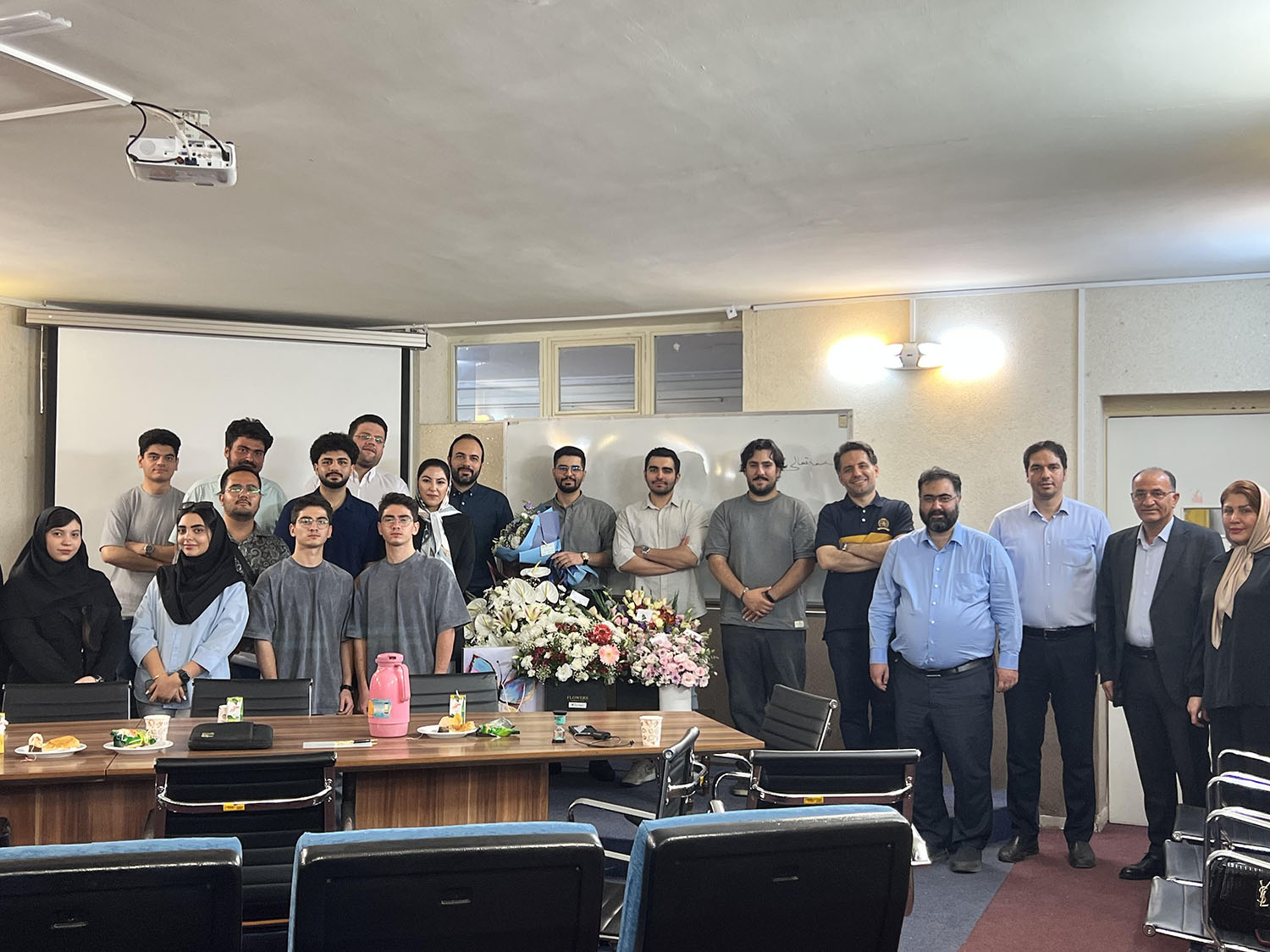
Yesterday, I defended my Master's thesis at Shahid Beheshti University — and passed. The work, supervised by Dr. Mohammadjavad Hamidia and evaluated by Dr. Hamid Bayesteh and Dr. Kiarash M. Dolatshahi, represents two years of research at the intersection of computer vision, graph theory, and machine learning for post-earthquake structural assessment.
The thesis title: Computer Vision-Based Lateral Strength and Stiffness Loss Estimation for Seismically Damaged RC Columns Using Graph Theory and Machine Learning.
The Problem I Set Out to Solve
After an earthquake, engineers face thousands of damaged buildings. The current inspection process — sending teams to visually assess every column — is slow, subjective, and inconsistent. Two inspectors looking at the same column often disagree. And visual assessment alone can't reliably estimate residual capacity.
The question driving my thesis: can we teach a computer to look at a cracked RC column and quantify how much strength it's lost?
The Approach: Graphs, Not Pixels
Standard computer vision treats cracks as pixel patterns — detecting where they are and how wide they've opened. But crack width isn't the whole story. A single diagonal crack near the base implies a different failure mechanism than a dense network of fine cracks across the surface. Both might cover similar pixel areas. Both mean completely different things for structural safety.
My approach converts crack patterns into graph representations — crack intersections become nodes, crack segments become weighted edges. Graph features (node degree, clustering coefficients, path lengths) capture the topology of the damage, not just its appearance. These features feed into machine learning models trained to predict residual lateral strength and stiffness.
What the Defense Covered
The defense presentation walked through the full pipeline — image processing with Python and OpenCV, graph construction from skeletonized crack maps, and regression modeling for capacity estimation. The committee, chaired by Dr. Mohammadjavad Hamidia and examined by Dr. Hamid Bayesteh and Dr. Kiarash M. Dolatshahi, raised thoughtful questions about generalization to different column geometries, the role of graph neural networks versus classical graph features, and practical deployment pathways for field inspections.
I'm grateful for their rigorous evaluation — it sharpened the work and clarified the next research directions.
What Comes Next
This thesis connects directly to my broader research in seismic assessment and structural health monitoring. The graph-based methodology applies beyond columns — the same principles work for bridge sensor networks, digital twin frameworks, and any domain where spatial data needs to be structured before it can be learned from.
I'm currently exploring extensions including graph neural networks that learn directly from graph-structured crack representations, multi-criteria damage assessment combining multiple graph metrics, and integration with post-earthquake decision-support systems.
If you work in structural assessment, infrastructure monitoring, or applied computer vision and machine learning for civil engineering, I'd welcome the conversation. Get in touch.
Supervisor: Dr. Mohammadjavad Hamidia
Examiners: Dr. Hamid Bayesteh, Dr. Kiarash M. Dolatshahi
Institution: Shahid Beheshti University, Faculty of Civil, Water and Environmental Engineering
Date: July 2026